I started my internship the day after my final exams ended; today marks exactly one month. The work itself is lighter than I expected—what actually drains you is the invisible field of always being on call. In the same month I traveled to Shanghai alone for the first time, and standing on the Bund I suddenly understood how large the world is. It also made me question whether putting every spare yuan into investments was ever the right answer.
Wake up early, take the bus, go to work, come home. Life had quietly settled into a loop. It was only today, packing up to leave Hangzhou for a short trip home, sitting on the train and looking back on the past month, that I felt like writing something down—call it a record of how this stretch of time actually felt.
1. On Working and Studying
My internship began the day after my final exams ended on July 13—so, July 14. Today is August 14, which makes it exactly one month.
If I had to sum up the month in a single sentence, it would be this: treasure your time at university.
Only after you have actually stepped into a workplace do you understand what a luxury it is to have a stretch of time that nobody keeps interrupting, time you can spend on whatever you care about purely because you want to.
Honestly, as an intern, the work itself is less exhausting than I imagined. Busy when there are tasks, quite relaxed when there are none. The project I am responsible for keeps moving forward, and while there are inevitably obstacles along the way, working through them one at a time feels genuinely good.
What actually wears you down is the invisible "field" of an office.
Even when everything on your plate is finished, it is hard to sink into anything of your own. Because you know someone could walk over at any moment, and a new task could land at any moment. So some part of you stays permanently on standby, permanently alert.
The workload may not be heavy, but by the end of the day your head is inexplicably tired.
Across this whole month, my weekday evenings have gone roughly like this: scroll some videos, watch a stream, unwind, go to bed. The evenings when I still had the energy to work on my own things, I could count on one hand.
I used to wonder why I felt like doing nothing at night when I had barely done anything physical. Now I think I understand: what work consumes is often not just time but attention—and that particular appetite for going home and tinkering with something.
Writing this down is partly a note to myself.
It is fine to rest after work, to be entertained, to lie flat for a while. Nobody is a machine.
But it is worth being careful, too, not to drift into that comfortable after-work haze and simply stay there.
Because I still have a lot of my own things I want to do.
What was the biggest source of pressure at school? For me, final exams.
What is the biggest source of pressure at work? Tasks, projects, and whether you can deliver what was asked of you.
If I had to compare them, I find the second more demanding.
Plenty of university courses let you pay attention when you feel like it and drift when you don't; come finals, you can cram your way to a decent GPA in a week or two. Compared with actually entering a workplace, university really does deserve the name "ivory tower."
We interns are not measured against KPIs yet, so the pressure is far lighter than it could be.
And even so, one stuck point in a project is enough to weigh on you. A problem drags on, progress stalls, and your mind starts running: will this affect the delivery date? Should I ask someone? How do I report this? What is the actual next step?
Never mind the full-time employees who genuinely carry KPIs, targets, and responsibility for outcomes.
So I think one of the real values of an internship is that it puts you in front of a real workplace early, and chips away at whatever filter you had in your head about what "having a job" means.
Though I have been lucky—everyone senior to me here has been genuinely kind.
One more change I find interesting: working is excellent training for speaking clearly.
Because if you are running a project, you cannot avoid reporting on it.
When I first arrived, there were times when I knew exactly what I meant and still talked in circles trying to say it. A month later, I can feel the difference.
Where is the project now? What went wrong? Why is it stuck? What have you already tried? How do you plan to fix it? Is there anywhere you need help?
You cannot answer those with a tangle in your head. When you report, you have to organize the information in a very short window so someone else can follow you immediately—ideally so they know the next move right away.
Which comes down to one line:
You have to think it through first. Only then can you say it clearly.
That said, given the choice between sitting through an afternoon of a filler lecture and pushing a real project forward at a company, I would probably still find the second more interesting.
A project has goals, feedback, and real problems to solve. You can feel something moving forward in your own hands, and that feels good.
But comparing work and school, one thing keeps getting clearer to me:
The way university protects your mental energy, and the freedom it gives you over your own time, is very hard to have once you are working.
Work may be more real and more formative; university gives you larger blocks of time, attention, and energy—for reading, learning, chasing your own interests, or simply staring into space.
So "treasure your time at university" reads completely differently to me now.
It used to sound like a platitude.
After one month of work, I think I finally hear it.
2. There Is No Such Thing as Social Anxiety
My application for university housing was rejected, so I ended up renting in Hangzhou. I owe thanks to a friend who introduced me to a landlord and got me out of a tight spot.
Finding that place meant asking about everything and contacting everyone: browsing listings on Xiaohongshu, asking about prices, sublet terms, whether short leases were possible, going back and forth with different landlords. Whether or not I found a room, my social skills got a real workout.
Back when I had just finished my last year of high school and was taking an IP course, I got nervous just starting a conversation with a stranger. Now I can walk into a corner shop during a typhoon and ask the owner for some hot water—though it is still better to buy something first before you ask.
So I am increasingly convinced that a lot of what gets called being "introverted" or "socially anxious" simply comes from not doing it enough. Meet enough people, open your mouth enough times, get turned down a few times, be awkward a few times, and it stops being a big deal.
A lot of abilities really are just practice.
3. Public Library Plus Starbucks
My favorite way to open a weekend in Hangzhou right now:
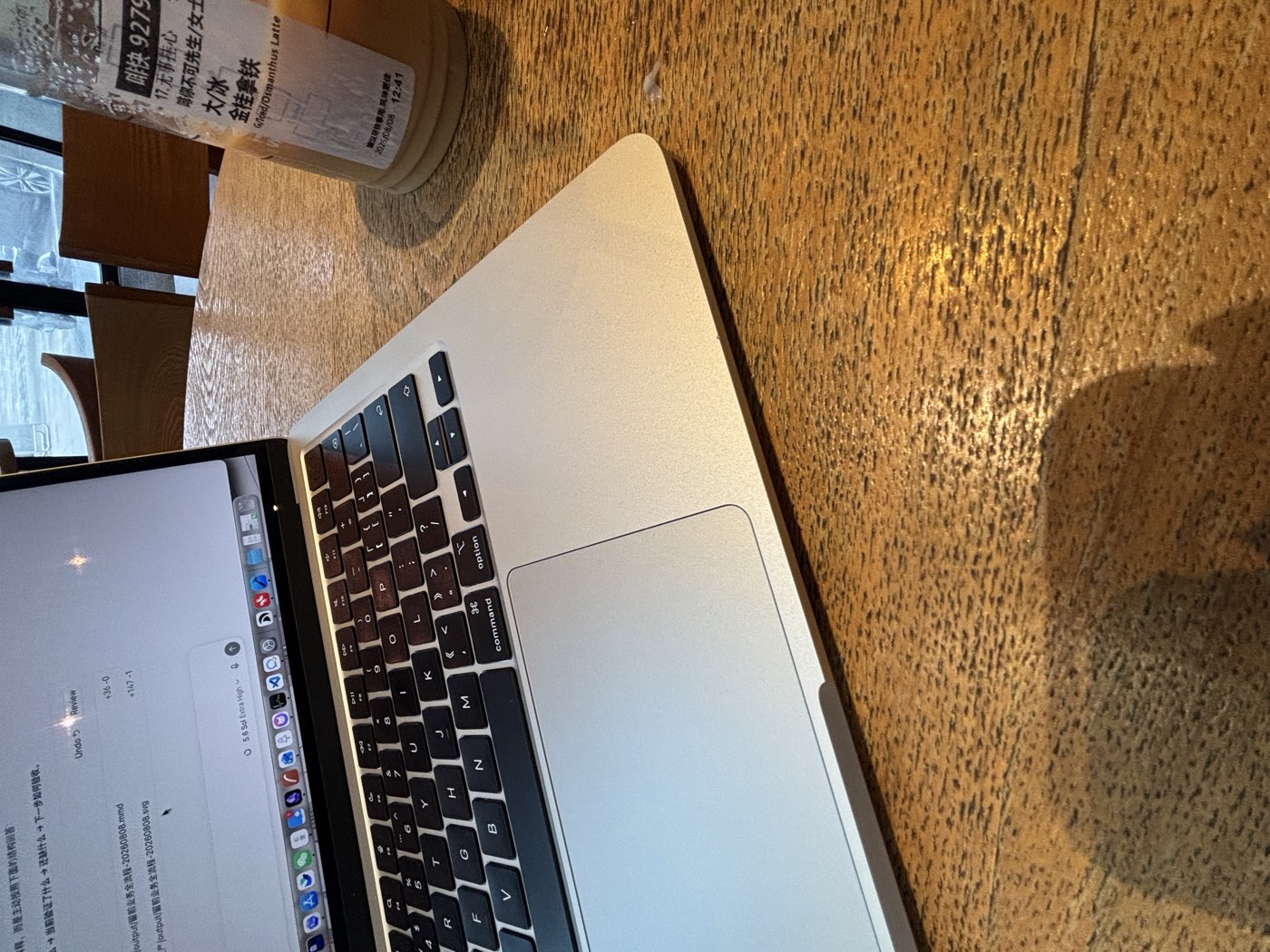
Spend the morning at the Zhejiang Provincial Library, taking advantage of the free hot water. Then find a Starbucks in the afternoon, open the MacBook, and stay for hours.
I especially recommend the Starbucks at Huanglong Century Plaza—fewer people, good atmosphere, comfortable seats, and a McDonald's next door, so dinner is handled on the way out.
Put those together and the weekend is about as good as it gets.
4. A Trip to the Arknights Carnival in Shanghai
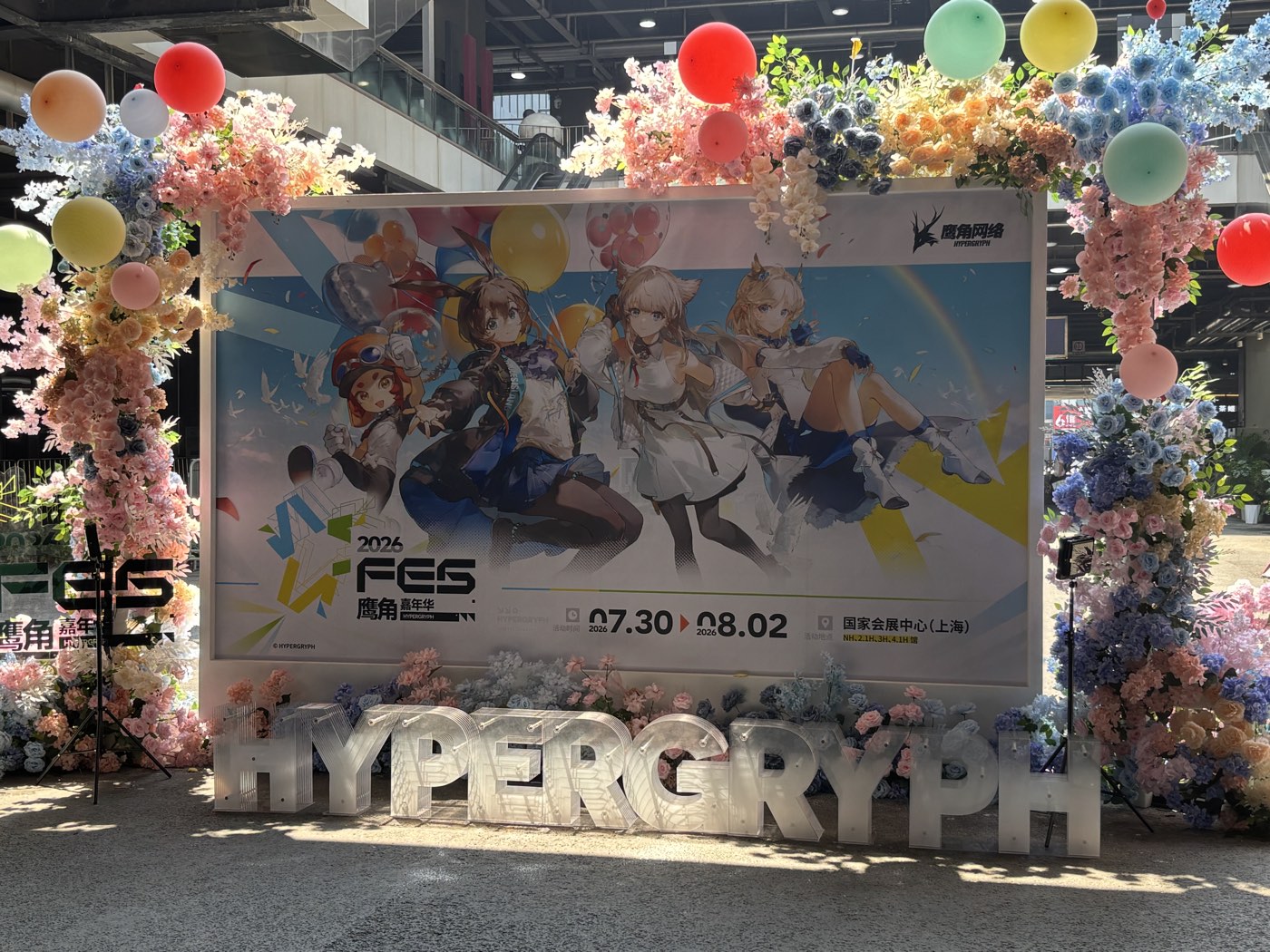
I went to Shanghai for the first time at the end of July. Traveling alone did make me a little nervous, but once I arrived and simply followed the plan I had made, it turned out to be nothing at all.
A lot of nervousness is just the absence of precedent. The first time, your brain has no plan, so it panics. Once you have been through it, it knows roughly what happens and how to handle problems, and the next time you are calm.
See people. See things. See the world.
The carnival was a lot of fun, and for me it was an entirely new kind of experience.
This afternoon I happened to read Wan Weigang writing about compounding, including a category he calls "experience capital":
Seventh is experience capital: the hard things you have done, the places you have been, the people you have been through something with. High-quality experience settles into judgment, narrative ability, and a sense of identity. Scientists have long known that experiential spending raises long-term well-being more than purely material spending does.
Reading that, I immediately thought of this trip.
When I first bought the carnival ticket, it stung a little. That was real money going out.
Afterward, I had one thing to say about it: worth it.
For one thing, 140-odd photos materialized on my phone out of nowhere.
I used to think that for some things, looking at pictures or scrolling videos was close enough. Being there in person taught me otherwise. Seeing it with your own eyes, hearing it with your own ears, walking into it yourself—it is not the same thing at all.
More importantly, every one of those photos corresponds to something that actually happened. You were there, you saw those things, you made a real connection with that city, and eventually that experience becomes part of your memory of your own life.
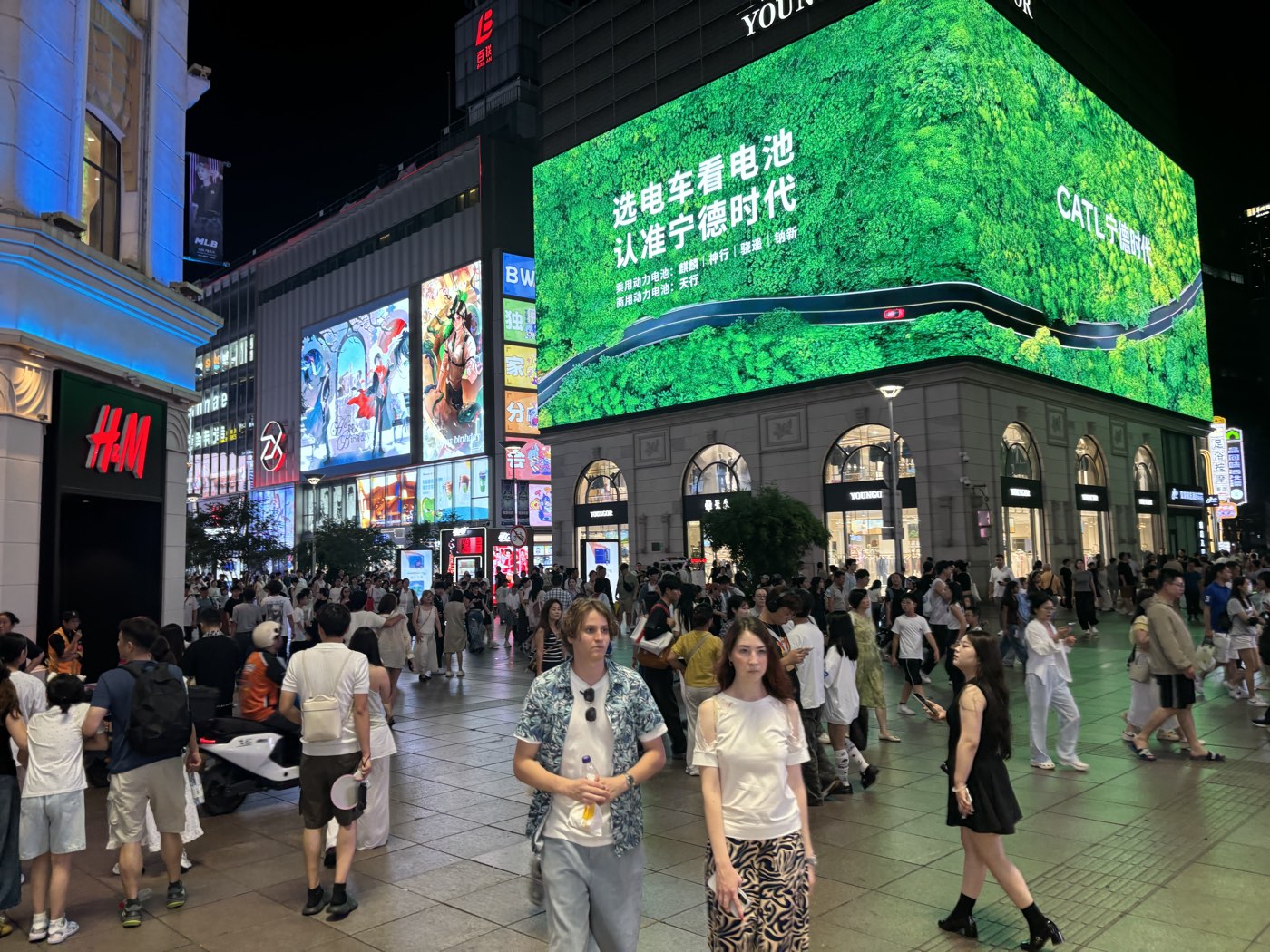
The first time I walked down Nanjing Road, I felt this very clearly.
You walk through the crowd, looking at the buildings and shops on either side and the people going past, and slowly you start to pick up the character of the city.
Shanghai feels very different from Hangzhou.
The difference is hard to pin down in an adjective or two, but when you are actually standing on the street, you can simply feel it.
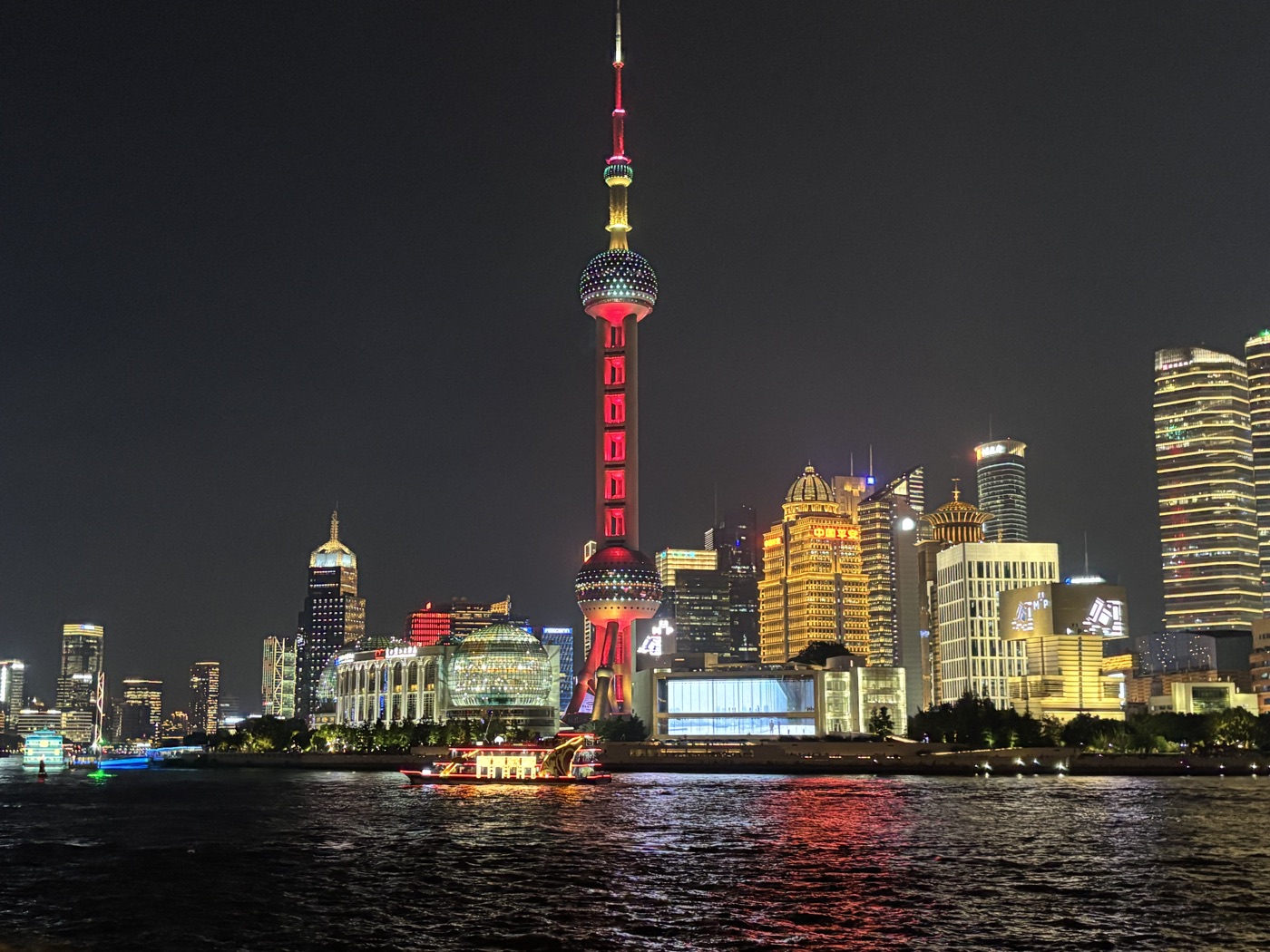
Later, standing near the Bund and looking across at the Oriental Pearl Tower and all that brightness on the far bank, I felt something close to shock.
Words cannot really reconstruct what that moment felt like.
Roughly, it was this—
It suddenly hit me that the world could be this large.
Some readers may find that overblown.
But before this year, the number of cities I had genuinely visited fit on one hand.
I used to be the classic stay-at-home type. Without a reason, I would not go out, and I certainly would not go looking for new places.
Going to a few more places and meeting a few more people may show no direct return at the time, but it settles slowly into your judgment, your taste, the way you talk, the range of what you can see—even into your sense of what kind of life you want.
That, I think, is what Wan Weigang means by experience capital.
The first thing that changed after this trip was how I think about money.
My approach used to be simple: earn more, spend less.
Spend as little as possible, spend nothing if you can, and put whatever is left into investments.
There is nothing wrong with that, and I still believe investing matters. But after one trip to Shanghai, I started reconsidering what money is actually for.
A few thousand yuan in an investment account might return a few hundred after a while.
But if some portion of that money takes you to a city you have never seen, shows you something you had only encountered in photos and videos, produces new feelings and new judgments in you, or even changes the way you see the world—that return is hard to express as a percentage.
Unlike tourism, you do not have to chase a city's famous sights. You can simply take a slow city walk and let the place register on you, which I think matters more.
Walk the streets, look at the shops, ride the subway, sit down in a café, watch the people, get a feel for how a day here runs.
And here is what I find genuinely interesting: the more you have seen, the stronger your desire to earn money becomes.
Because you start to realize how many places there are still to go, how many things there are still to do, how much there is still to see.
Earn more. Then go see more of the world.
5. On AI
Between Claude Code, Codex, and other LLMs, I have probably run through the better part of ten billion tokens by now.
After all that, my most immediate reaction is still: AI is genuinely remarkable.
Sometimes I even wonder whether I would be who I am now without it.
Across those tokens, I have built things with AI that I would never have imagined myself building: a Claude Code handbook, FreeGrid, and some of the projects I am now pushing forward at work. A few years ago I would not have known where to start on most of them. Now I can actually get them done.
But the more I use it, the more disenchanted I become, too.
Because eventually you notice that the ceiling of AI depends heavily on the person using it.
It generates output from your input, and what background you provide, how you think, how you judge whether a result is any good, which direction you push next—all of that still sits with the human.
A lot of people imagine AI as a wish-granting machine: I say one sentence and it should perfectly realize whatever was in my head.
In my experience so far, that essentially never happens.
Nearly every complex project I have finished came out of round after round between me and the model.
Let it produce a first version; I look for what is wrong. Adjust the direction, add context. It generates again, I judge again. When something is off, we throw it out and start over.
After many rounds of that, it gradually converges on what I actually wanted.
Thinking, judgment, and the ability to decide still belong to the person.
Of course, it may just be that I am not very good at this yet.
My inputs are incomplete, I break the problem down poorly, so the output falls short and I have to make up the difference with extra rounds.
If AI keeps improving, there may well come a day when much of this no longer requires my attention. I would not rule it out.
But for now, I am increasingly convinced that when genuinely capable people use AI, the amplification is enormous.
As for AI's impact on real work, this internship let me see it firsthand.
The much-discussed FDE role is one part of it. More importantly, companies really have started rebuilding their workflows around AI.
"AI for efficiency" is not a slogan. It is actually happening inside companies.
So as far as I can judge right now, knowing how to use AI will likely become a baseline professional skill.
And yet the more I use it, the surer I am of something else:
Real interaction between people is still very hard to replace.
Over July and August I met a number of people offline whom I had known for a while.
Some I knew from the Shuchenglin community, some were friends I did operations work with last year, some were people I had met during a remote internship.
Chatting through a screen, I already felt close to them.
But actually meeting them in person—sitting down together, eating, talking—was not remotely the same.
That is something AI cannot give me, at least not now.
AI can talk with me about almost anything, write code, build projects, untangle my thinking—and sometimes it understands what I am trying to say better than most people do.
But when a real person is sitting across from you, what that gives you is still its own thing.
6. On Interning Away From Home, and Going Back (added Aug 15)
August 15. One day at home, and I realized it is not really different from any other summer break at home. By the afternoon I was already a little eager to get back to Hangzhou.
Sitting at my desk at home, I felt something surface: the sense that I could already see the end of these days. Today looks like this, tomorrow will look about the same, and so on. If every day is only mechanical repetition, with nothing new entering, that is absolutely not the life I want.
The real reason I came back, though, was that I missed home. Video calls are fine, but a screen cannot replace being in the same room. Coming home briefly now and then, spending time with my parents, does make me happy.
But thinking about it further, commuting between home and the office is not so different from repeating the same days at home.
What matters more is what you are actually doing each day. If the days are all roughly the same and nothing new comes in, then whether you are interning or sitting at home, it is fundamentally repetition either way.
Repetition itself is unavoidable; most people's lives are built largely out of it. What is worth watching for is the day you stop noticing it.
So I am writing this down as a reminder to myself: put something new into your life on purpose.
Epilogue
I have written five thousand characters. It looks like a lot, but distilled down, the core of it would fit in five or six hundred.
Sometimes I go back and forth on whether it is better to write something tight and spare, or to keep all the small narrative detail.
Then again—writing should be satisfying for the person writing it. That is what matters most.